I.Compiling and publishing of CDFI
1. What is CDFI?
CDFI is the abbreviations of China Import Dry Bulk Freight Index, which reflects spot market changes in China import dry bulk transportation market. CDFI is published by Shanghai Shipping Exchange, including one composite index, four sub-cargo component indices, and 14 vc-basis freight rate indices.
2. What's the market coverage of CDFI?
The VC-basis freight rates of 14 individual routes express the spot freight rate in China import shipping market. The 14 VC routes cover four major China importing commodities i.e. iron ore, Coal, Grain, Nickel and 3 major ship types i.e. Capesize, Panamax and Supramax. The index presentation is in VC (US dollar/Ton) format. Please log on webpage(http://www-test.sse.sh.cn/index/cdfinew.jsp), for the details and the parameters of the routes.
3. What are the components of CDFI sample data?
The sample data are collected from the panelists of FDI, including ship owners/operators, shippers/agents and brokers. All the panelists are the world-known firms or those who enjoy sound reputation and good credit standing in certain fields. Please click the following URL for the name list:http://en-test.sse.sh.cn/indices/introduction_cdfi_new.jsp
4. Why do we use the data from three parties in CDFI calculation?
The sample data of CDFI calculation come from three parties, namely carriers, shippers and brokers, who are the dealers of market. As the middleman, brokers can provide the rate assessments that derive from their broking business. Besides broking transactions, many charter parties were directly reached by carriers and cargo owners/traders given the reality of the China import dry bulk transport market. Hence, this three-party reporting mechanism suits the Chinese market better, with a more rational data structure and comprehensive information.
5. How are VC/TCT rates of CDFI individual indices calculated?
Panelists’ rates for concerning routes have been included in the average mean value, and both the highest and lowest are excluded.

Pi: Average VC rate in i trade route.
Pij: VC rate of j company in i trade route.
n: Number of samples included in calculation of i trade route.

m highest values in i trade route.

m lowest values in i trade route, m< n/2
The minimum number of samples involved in each published trade lane is Five. If the minimum number cannot be satisfied due to force majeure or any other special factors, SSE has the right to maintain, postpone or suspend publishing of index.
The number of highest and lowest rate which will be excluded in each trade route depands on the total sample number of the specific publication.
n<7, No highest and lowest values will be removed
7≤n<20, 1 highest and 1 lowest values will be removed
20≤n<30, 2 highest and 2 lowest values will be removed
30≤n<40, 3 highest and 3 lowest values will be removed
Trimmean will be applied when n>20. This removes 20% percentage of the largest and smallest values before calculating the mean.
6. What is the calculation of CDFI sub-cargo index?
The methodology of weighted mean of relative routes under same cargo type is applied in the calculation of sub-cargo freight rate index of CDFI.
CDFI routes weight table (since 28th Nov 2017)
| Route |
Cargo Volumee |
Contract Type |
Weight |
| Iron ore freight rate index |
| Dampier(West Australia)—Qingdao(China) |
170000/10% |
VC |
25.0% |
| Tubarao(Brazil)—Qingdao(China) |
170000/10% |
VC |
20.0% |
| Saldanha(South Africa)—Qingdao(China) |
170000/10% |
VC |
2.5% |
| Geraldton(Australia ) —Qingdao (China) |
60000/10% |
VC |
2.5% |
| Coal freight rate index |
| Newcastle(Australia)—Zhoushan(China) |
130000/10% |
VC |
5.0% |
| Hay Point(Australia)—Zhoushan(China) |
85000/10% |
VC |
5.0% |
| Samarinda(Indonesia)—Guangzhou(China) |
70000/10% |
VC |
5.0% |
| Taboneo(Indonesia)—Guangzhou(China) |
50000/10% |
VC |
5.0% |
| Taboneo(Indonesia)—Nantong(China) |
45000/10% |
VC |
5.0% |
| Grain freight rate index |
| Santos(Brazil)—North China |
66000/10% |
VC |
10.0% |
| Santos(Brazil)—North China |
60000/10% |
VC |
0% |
| Tacoma(West America)—North China |
63000/10% |
VC |
2.5% |
| Mississippi(US Gulf)—North China |
66000/10% |
VC |
7.5% |
| Nickle ore freight rate index |
| Surigao(Philippines) — Rizhao(China) |
50000/10% |
VC |
5.0% |
| Total weight |
|
|
100.0% |
7. What is calculation of CDFI composite index?
The composite index is the weighted mean of sub-cargo index.
8. When is CDFI publicized?
II. Compiling and publishing of FDI
1.What is FDI?
FDI is the abbreviation of Far East Dry Bulk Index, which reflects spot market changes in Far East dry bulk transportation market. The FDI includes one composite index, five cargo component indices (i.e. FDI VC index, FDI TCT index and Capesize/Panamax/Supramax TCT index) and 20 route indices (i.e. 6 TCT hire rate index and 14 VC freight rate index, released by Shanghai Shipping Exchange.
2.What's the market coverage of FDI?
FDI includes 6 TCT routes and 14 VC routes which express spot market of Far East shipping market. These routes cover main importing and exporting cargoes i.e. iron ore, coal, grain, nickel ore, steel product and bauxite etc and vessel type i.e. Capesize, Panamax and Supramax. FDI publishes in a combined form of voyage charter - VC (U.S. $/ton) and time charter on trip basis TCT (U.S. $/day). Please log on webpage (http://www-test.sse.sh.cn/index/fdinew.jsp), for the details and the parameters of the routes.
3.What are the components of FDI sample data?
The sample data are collected from the panelists of FDI, including ship owners/operators, shippers/agents and brokers. All the panelists are the world-known firms or those who enjoy sound reputation and good credit standing in certain fields. Please click the following URL for the name list:http://en-test.sse.sh.cn/indices/introduction_fdi_new.jsp.
4.Why do we use the data from three parties in FDI calculation?
The sample data of FDIcalculation come from three parties, namely carriers, shippers and brokers, who are the dealers of market. As the middleman, brokers can provide the rate assessments that derive from their broking business. Besides broking transactions, many charter parties were directly reached by carriers and cargo owners/traders given the reality of the China import dry bulk transport market. Hence, this three-party reporting mechanism suits the Chinese market better, with a more rational data structure and comprehensive information.
5.How is FDI individual indices calculated?
Panelists’ rates for returning route have been included in the average mean value, and both the highest and lowest are excluded.

Pi: Average VC rate /Average TCT rate in i trade route.
Pij: VC rate / TCT rate of j company in i trade route.
n: Number of samples included in calculation of i trade route.

: m highest number in i trade route.

: m lowest number in i trade route, m < n/2.
The minimum number of samples involved in each published trade lane is Five. If the minimum number cannot be satisfied due to force majeure or any other special factors, SSE has the right to maintain, postpone or suspend publishing of index.
The number of highest and lowest rate which will be excluded in each trade route depands on the total sample number of the specific publication.
n<7, No highest and lowest values will be removed.
7≤n<20, 1 highest and 1 lowest values will be removed.
20≤n<30, 2 highest and 2 lowest values will be removed.
30≤n<40, 3 highest and 3 lowest values will be removed.
Trimmean will be applied when n>20. This removes 20% percentage of the largest and smallest values before calculating the mean.
6.What is the calculation of FDI TCT index , FDI VC index and Capeseize / Panamax/ Supramax TCT index?
The methodology of weighted mean is applied in the calculation of FDI TCT index and FDI VC index.
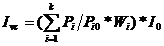
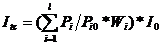
Ivc: FDI VC index.
Itc: FDI TCT index.
I0: Base rate of FDI VC index and FDI TCT index.
Pio: VC/ TCT rates for i trade route in base period.
Pi: VC/ TCT rates for i trade route in calculation period.
Wi: Weighting for VC index and TCT index in i trade route.
k: Trade route that include in the calculation of VC index.
l: Trade route involved in the calculation of TCT index.
The methodology of weighted mean of related routes under same vessel type is applied in the calculation of Capeseize / Panamax/ Supramax TCT index.(Calculation ditto).
FDI routes weight table (since 28th Nov 2017)
| Routes |
Size MT |
Contract Type |
Weighting |
| China-Japan/Pacific Round Voyage |
180000DWT |
TCT |
40.0% |
| Dampier(West Australia)—Qingdao(China) |
170000/10% |
VC |
25.0% |
| Tubarao(Brazil)—Qingdao(China) |
170000/10% |
VC |
20.0% |
| Saldanha(South Africa)—Qingdao(China) |
170000/10% |
VC |
2.5% |
| Newcastle(Australia)—Zhoushan(China) |
130000/10% |
VC |
5.0% |
| China-Japan/Pacific Round Voyage |
82000DWT |
TCT |
20.0% |
| South China via Indonesia /South Korea |
76000DWT |
TCT |
10.0% |
| Hay Point(Australia)—Zhoushan(China) |
85000/10% |
VC |
5.0% |
| Samarinda(Indonesia)—Guangzhou(China) |
70000/10% |
VC |
5.0% |
| Geraldton(Australia)—Qingdao(China) |
60000/10% |
VC |
2.5% |
| Santos(Brazil)—North China |
66000/10% |
VC |
10.0% |
| Santos(Brazil)—North China |
60000/10% |
VC |
0% |
| Tacoma(West America)—North China |
63000/10% |
VC |
2.5% |
| Mississippi(US Gulf)—North China |
66000/10% |
VC |
7.5% |
| South China /Indonesia Round Voyage |
57000DWT |
TCT |
10.0% |
| Singapore via Indonesia/South China |
57000DWT |
TCT |
10.0% |
| Bohai Bay(China)-Southeast Asia |
57000DWT |
TCT |
10.0% |
| Taboneo(Indonesia)—Guangzhou(China) |
50000/10% |
VC |
5.0% |
| Surigao(Philippines)—Rizhao(China) |
50000/10% |
VC |
5.0% |
| Taboneo(Indonesia)—Nantong(China) |
45000/10% |
VC |
5.0% |
| Total weighting in VC routes |
|
|
100.0% |
| Total weighting in TCT routes |
|
|
100.0% |
7.What is calculation of FDI composite index?
The methodology of weighted mean of FDI TCT index and FDI VC index is applied in the calculation of composite index.

I: FDI composite index.
IVC: FDI VC index.
ITCT: FDI TCT index.
WVC and WTCT: integrated weighting.
A: integrated adjustment coefficient.
8.When is FDI publicized?
FDI will be publicized at 17:00(Beijing Time) on each date of publication via www-test.sse.sh.cn and
www.chineseshipping.com.cn.
9.How are the publication dates decided?
The date of FDI publication is generally on each working day, or equals from Monday to Friday, which is adjusted according to statutory holidays. The specific dates of publication will be decided and made known to public by Shanghai Shipping Exchange.
III. Compiling and publishing of CTFI
1.What is CTFI?
CTFI is the abbreviation of China Import Oil Tanker Freight Index that shows the fluctuation of spot freight rates
of Chinese import crude oil tanker transport market.
Published by Shanghai Shipping Exchange (SSE), the index includes one composite index and WS rate of individual
routes.
Remind: For WS flat rate information, please log on to:
http://www.worldscale.co.uk/
and subscribe WS membership.
2.What's the market coverage of CTFI?
Two voyage charter trade routes are included, from the ME Gulf Ras Tannura to China Ningbo and from West Africa
Malongo and Djeno to China Ningbo respectively. Both routes are for Very Large Crude Carrier (VLCC), 265,000 MT type
for the former and 260,000 MT type for the latter. For the details and the parameters of the routes, please click
the following link:
http://www-test.sse.sh.cn/index/singleIndex?indexType=ctfi..
3.What are the components of CTFI sample data?
The sample data are collected from the panelists of CTFI, which include ship owners/operators, shippers/agents and
brokers. All the panelists are the world-known firms or those enjoy sound reputation and good credit standing in
certain field. Please click the following URL for the name list:
http://www-test.sse.sh.cn/indexIntro?indexName=ctfi
4.Why do we use the data from three parties in CTFI calculation?
The sample data of CTFI calculation come from three parties, namely carriers, shippers and brokers,
which are the dealers of market. As the middleman, brokers can provide the rate assessments which derive from their
broking business. Besides broking transactions, many charter parties are directly reached by carriers and cargo
owners/traders given the reality of the China import crude oil transport market. Hence, this three-party reporting
mechanism suits the Chinese market better, with a more rational data structure and comprehensive information
5.How is CTFI individual indices (WS rate) calculated?
Panelists’ rates for returning route have been included in the average mean value, and both the highest and lowest are excluded.

Pi: Average Freight rate (WS) in i trade route
Pij: WS Rate of j company in i trade route
n: Number of samples involved in calculation of i trade route.
: m highest number in i trade route;
: m lowest number in i trade route, m< n/2
The minimum number of samples involved in each published trade lane is Seven. If the minimum number cannot be
satisfied due to force majeure or any special factor, SSE has the right to maintain publishing, postpone or suspend
publishing of index.
The number of highest and lowest excluded in each trade route is decided by the sample number of the specific
publication.
7≤n<20, 1 highest and 1 lowest number will be removed
20≤n<30,2 highest and 2 lowest number will be removed
30≤n<40,3 highest and 3 lowest number will be removed
Trimmean will be applied when n>20. This removes 20% percentage of the largest and smallest values before
calculating the mean.
6.How is CTFI composite index calculated?
The composite index is the weighted mean of Freight (WS) indeices
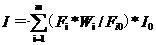

CTFI composite index

Average Freight Index (USD/Ton), converted from flat rate of WORLD
SCALE based on current WS rate.

Average Freight Index (USD/Ton) in the base period.

CTFI composite ndex value in base period.
i: Trade route; m: Number of routes; Wi: Weighting factor for i trade route.
The base period of composite index is set on 28th November, 2012, with base index value of 1,000 points.
Weighting Factor of CTFI (28th November, 2013)
| Routes |
Weighting Factor |
| ME Gulf Ras Tannura to China Ningbo |
60% |
| West Africa Malongo and Djeno to China Ningbo |
40% |
7.When is CTFI publicized?
8.How are the publication dates decided?
The date of CTFI publication is generally on each working day, Monday to Friday, which is adjusted
according to statutory holidays. The specific dates of publication will be decided and made known to public by
Shanghai Shipping Exchange.